
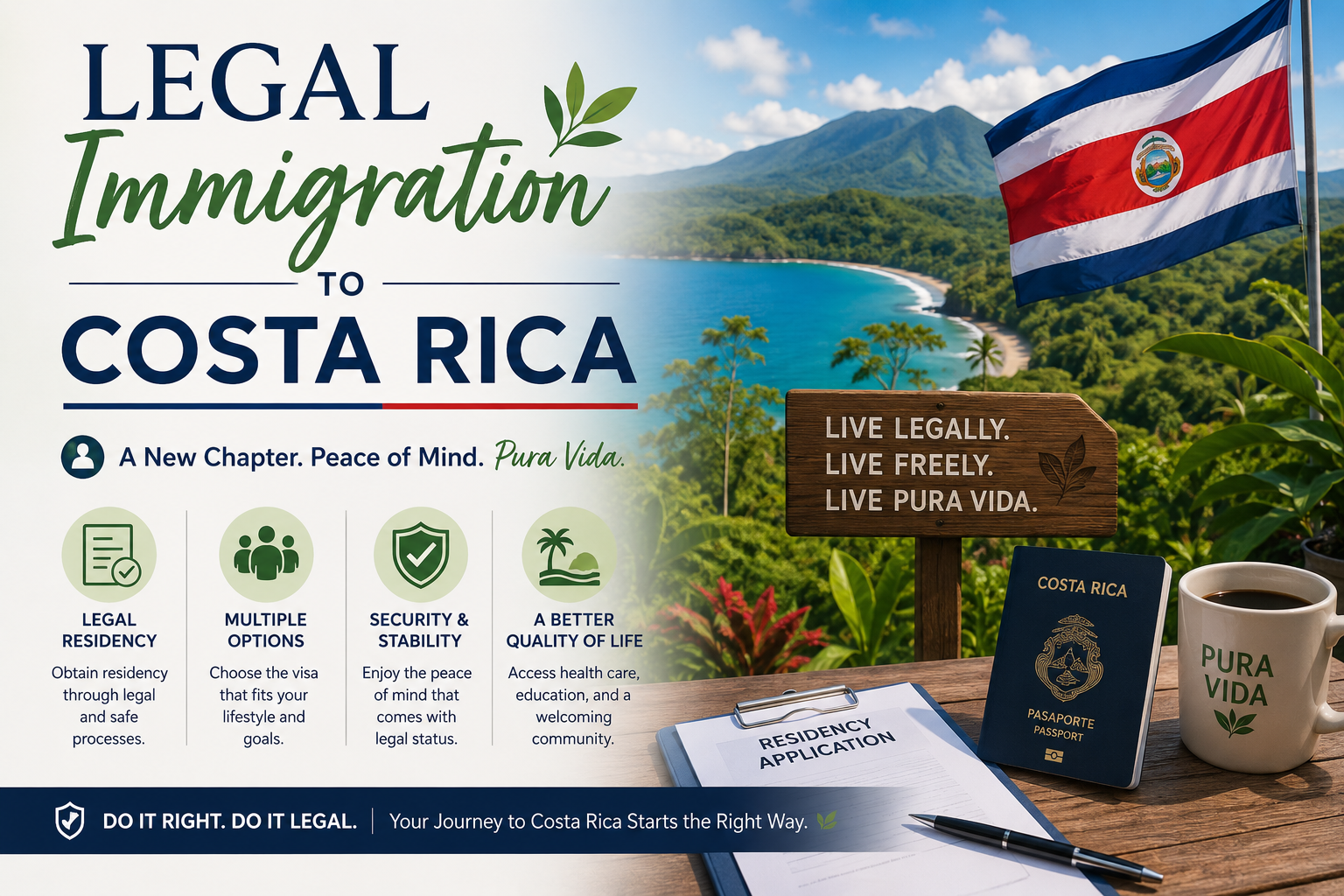
Costa Rica is one of the most attractive destinations for individuals seeking a better quality of life, a stable environment, and access to breathtaking natural beauty. However, making the move requires more than just packing your bags—it’s essential to follow the legal immigration process to ensure a smooth and stress-free transition.
This comprehensive guide explains everything you need to know about legally immigrating to Costa Rica, including visa options, residency requirements, documentation, and long-term pathways.
What Does Legal Immigration to Costa Rica Mean?
Legal immigration means entering and staying in Costa Rica in full compliance with the country’s immigration laws. This involves:
- Entering with a valid visa or tourist permit
- Applying for legal residency under the appropriate residency category
- Maintaining your legal status through renewals and compliance with local laws and regulations
Failing to follow legal procedures can result in fines, deportation, or restrictions on re-entry.
Entry Options: Tourist Visa vs Legal Residency
Most people begin their journey to Costa Rica as tourists.
Tourist Entry
Many nationalities can enter Costa Rica without a visa and stay for up to 180 days. While this is a convenient way to explore the country, it does not provide long-term legal status.
Some individuals attempt “visa runs” (leaving and re-entering every 180 days), but this is increasingly discouraged and can lead to complications.
Legal Residency
To live in Costa Rica long-term, you must apply for legal residency through one of the approved immigration categories.
Main Legal Residency Options in Costa Rica
Costa Rica offers several immigration pathways depending on your financial situation, purpose, and personal circumstances.
Pensionado Residency
This option is ideal for retirees with a life-time, guaranteed pension.
- Requires proof of stable monthly income of at least US1,000
- One of the easiest and most popular residency options
- Offers a straightforward path to applying for permanent residency
Rentista Residency
Designed for individuals with passive or independent income not from wages or sakary
- Requires proof of consistent income or a financial deposit of US$60,000
- Suitable for non-retirees with financial stability
- Does not provide a work permit
Investor Residency
Perfect for those looking to invest in Costa Rica.
- Requires a qualifying investment (real estate, business, or other assets) od at least US$150,000 (amount subject to change)
- Encourages economic contribution to the country
- Can lead to permanent residency
Residency Through Family Ties (“Vínculo”)
One of the fastest legal immigration routes.
- Available if you have a Costa Rican spouse or a child born in Costa Rican soil
- May lead directly to permanent residency
- Offers fewer restrictions compared to other categories
Work-Based Residency
For individuals hired by Costa Rican employers.
- Requires a valid job offer from a registered Costa Rica-based company or entity
- Employer sponsorship is typically needed
- Subject to strict labor regulations
Digital Nomad Visa
A newer option for remote professionals.
- Requires proof of income earned from outside Costa Rica
- Allows temporary legal stay
- Does not directly convert to permanent residency
Key Requirements for Legal Immigration
Regardless of the residency type, applicants must meet several core requirements.
Essential Documents
You will typically need:
- A valid passport
- Birth certificate
- Police clearance certificate
- Proof of income or financial stability
- Passport-sized photographs
All documents must be:
- Translated into Spanish
- Apostilled or officially legalized in the country where the document was issued
Incomplete or incorrect documentation is one of the most common causes of delays.
The Legal Immigration Process Step-by-Step
Understanding the process helps you avoid mistakes and delays.
Step 1: Choose Your Residency Category
Select the option that best matches your financial and personal situation.
Step 2: Gather and Prepare Documents
Ensure all documents are issued properly.
Step 3: Submit Your Application
Applications can be submitted in Costa Rica at the Immigration Office or through a consulate abroad
Step 4: Pay Fees and Provide Biometrics
Pay the application filing fees.
Government fees and fingerprinting are required.
Step 5: Wait for Approval
Processing times can vary from several months to over a year.
Step 6: Register with Local Authorities
After approval, you must complete final registration steps in Costa Rica.
Temporary vs Permanent Residency
Most immigrants begin with temporary residency, which is valid for a limited period and must be renewed.
Temporary Residency
- Typically valid for 2 years
- Requires periodic renewal
- May restrict local employment
Permanent Residency
- Available to apply for permanent residency after 3 years of legal residency
- Allows unrestricted work
- Offers greater stability
Legal Obligations After Immigration
Maintaining your legal status is just as important as obtaining it.
Stay Requirements
All residency categories require you to spend a minimum amount of time in Costa Rica each year.
Healthcare Enrollment
Once the application for residency is approved, all residents must enroll in Costa Rica’s public healthcare system, known as “La Caja”. Monthly dues apply.
Renewals
Failing to renew your residency on time can result in penalties or loss of status.
Common Mistakes to Avoid
Many applicants face unnecessary complications due to avoidable errors.
- Submitting incomplete or incorrect documents
- Relying on tourist status for long-term living
- Ignoring renewal deadlines
- Not understanding work restrictions
- Attempting the process residency applications without professional guidance
Benefits of Legal Immigration to Costa Rica
Following the legal process provides numerous advantages:
- Peace of mind and legal security
- Access to healthcare and financial services
- Ability to apply for permanent residency
- Eligibility for citizenship after several years
- Easier integration into local society
Pathway to Citizenship
Legal immigration can eventually lead to full citizenship.
- Eligible after 7 years of legal residency. Note: both requirements are waived for applicant over the age of 65
- Requires basic Spanish proficiency and civic knowledge
- Dual citizenship is often allowed
Why Work with Immigration Consultants like Residency in Costa Rica?
While it’s possible to apply independently, many expats choose professional assistance.
Benefits include:
- Faster and more accurate application processing
- Reduced risk of errors or delays
- Guidance tailored to your specific situation
- Ongoing support for renewals and compliance
Final Thoughts: Building a Legal Life in Costa Rica
Legal immigration to Costa Rica is not just about paperwork—it’s about building a secure and fulfilling life in one of the world’s most beautiful countries.
By choosing the right residency path, preparing your documentation properly, and following the legal process, you can enjoy everything Costa Rica has to offer without complications.
Whether you’re retiring, investing, or starting a new chapter, doing it the right way ensures long-term success and peace of mind.
If you are ready to take the next step, working with experienced professionals like Residency in Costa Rica can make your transition more efficient, smoother and much less stressful.
Residency In Costa Rica
Your Trusted Partner for Residency & Relocation Services
✉️info@ResidencyInCostaRica.com
📞U.S. phone, WhatsApp, Telegram, and FaceTime 1-818-400-0633
📞Costa Rica Number +506-8869-9669